Cannabis Decontamination Systems: A 2026 Buyer's Guide
Microbial contamination remains one of the most persistent operational risks in cannabis production. Mold, yeast, and bacterial contamination can cause failed tests, forcing cultivators to destroy entire harvest batches.
Cannabis decontamination systems are post-harvest technologies used to reduce microbial contamination such as mold, yeast, and bacteria in cannabis flower. These systems help licensed producers meet regulatory testing requirements while preserving product quality and yield.
As testing standards tighten across licensed markets, post-harvest microbial reduction is no longer optional. It is a core part of maintaining compliance, protecting yield, and keeping operations predictable.
Modern decontamination technologies now give operators multiple paths to reduce microbial contamination while preserving cannabinoids, terpene profiles, and flower structure.
The key question is not which technology exists. It is which system will consistently pass testing without slowing down your operation or degrading your product.

Disclosure: Ziel manufactures radio frequency decontamination systems. This guide covers the broader category, including competing technologies and providers.
Main Types of Cannabis Decontamination Technologies
| Technology | Throughput (8 hrs) | Cost / lb | Quality Impact | Key Constraint |
|---|---|---|---|---|
| RF | High (≈160 lb) | Low (≈$2–$3) | Low | Capital investment |
| X-Ray | Moderate (≈50 lb) | High (≈$8–$12) | Low to moderate | Licensing + infrastructure |
| Gamma | High (off-site) | High (≈$20–$30) | High | Logistics + quality impact |
| E-Beam | High (off-site typical) | High (≈$20–$30) | Moderate | Penetration limits |
| Ozone | Low (≈20 lb) | Moderate (≈$3–$5) | Moderate | Surface-only treatment |
| Reactive Oxygen | Moderate (≈80 lb) | High (≈$20+) | Moderate | Consumables + consistency |
| Cold Plasma | Low to moderate | Unknown | Low | Limited validation |
| Cryo | Unknown | Unknown | Unknown | Limited data |
Decontamination Technologies and Providers
The following sections cover the most commonly used decontamination technologies across licensed cannabis operations, organized by method. Providers within each category are listed alphabetically.
Radio Frequency (RF) Systems
RF technology uses electromagnetic energy to penetrate flower and reduce microbial load throughout the batch. As a non-ionizing method, it is designed for inline, on-site processing at commercial scale.
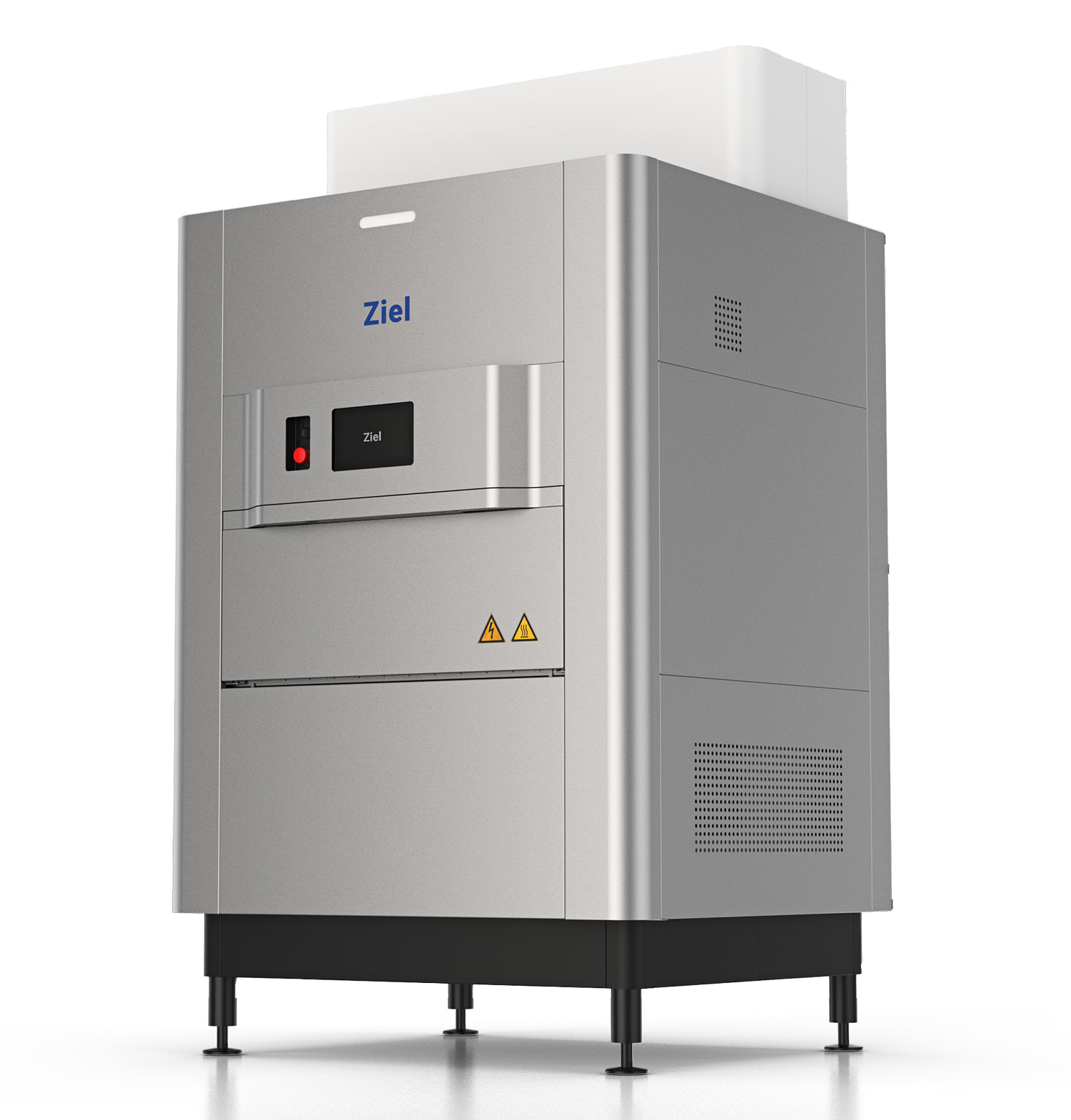
Ziel
Ziel provides radio frequency systems designed for inline microbial reduction at commercial scale.
Where it fits: Operators that need to move volume without creating bottlenecks or risking quality degradation.
X-Ray Systems
X-ray systems use ionizing radiation to reduce microbial contamination in cannabis flower. They are deployed on-site and require facility infrastructure and licensing to support radiation use. Duty cycle, which refers to the percentage of time a system can actively process during a shift, varies by manufacturer and directly affects throughput.
Kimtron
- Throughput: High, supported by 100% duty cycle operation
- Processing model: On-site
- Quality: Generally preserved with some terpene sensitivity at higher doses
Watch out for: Licensing requirements and facility infrastructure
Where it fits: Facilities that can support radiation systems and want controlled, repeatable batch processing at higher volumes.
Precision X-Ray
- Throughput: High, supported by 100% duty cycle operation
- Processing model: On-site
- Quality: Generally preserved with some terpene sensitivity at higher doses
Watch out for: Licensing requirements and facility infrastructure
Where it fits: Facilities that can support radiation systems and want controlled, repeatable batch processing at higher volumes.
Rad Source Technologies
Rad Source manufactures X-ray systems used to reduce microbial contamination in cannabis flower.
- Throughput: Moderate, supported by 50% duty cycle operation
- Processing model: On-site
- Quality: Generally preserved with some terpene sensitivity at higher doses
Watch out for: Compliance requirements and facility infrastructure
Where it fits: Operators looking for an in-facility X-ray solution with established deployment, where throughput is not a primary constraint.
VJ Scientific
- Throughput: High, supported by 100% duty cycle operation
- Processing model: On-site
- Quality: Generally preserved with some terpene sensitivity at higher doses
Watch out for: Licensing requirements and facility infrastructure
Where it fits: Facilities that can support radiation systems and want controlled, repeatable batch processing at higher volumes.
XRpure
- Throughput: High, supported by 100% duty cycle operation
- Processing model: On-site
- Quality: Generally preserved with some terpene sensitivity at higher doses
Watch out for: Licensing requirements and facility infrastructure
Where it fits: Facilities that can support radiation systems and want controlled, repeatable batch processing at higher volumes.
Ozone Systems
Ozone-based systems use a non-ionizing method to treat surface-level microbial contamination in controlled batch environments.
Willow Industries
Willow Industries provides ozone-based remediation systems.
- Throughput: Lower, batch-based
- Processing model: On-site
- Quality: Risk of terpene oxidation
Watch out for: Surface-only treatment
Where it fits: Operators targeting surface contamination in controlled batch environments.
Gamma and E-Beam Processing
Gamma and electron beam technologies are widely used in pharmaceutical and food sterilization but are not typically deployed inside cannabis facilities.
- Throughput: High at facility level
- Processing model: Off-site
- Watch out for: Logistics, cost, and chain-of-custody complexity
Gamma
- Uses Cobalt-60
- Known risk of terpene and cannabinoid degradation
E-beam
- No radioactive source
- Faster processing than gamma
- Limited penetration in dense flower
Where they fit: Operators that can accommodate off-site processing and prioritize compliance over operational control.
Cold Plasma
Cold plasma is an emerging technology that reduces microbial contamination at low temperatures.
- Throughput: Low to moderate
- Processing model: Early-stage deployment
Watch out for: Limited validation and surface-level treatment
Where it fits: Evaluation and pilot programs, not primary production systems.
Cryo-Pasteurization
Cryo-pasteurization uses cold processing to reduce microbial load.
- Throughput: Not well established
- Processing model: Early-stage
Watch out for: Limited data and minimal commercial use
Where it fits: Experimental use cases.
How to Choose the Right System
Most purchasing decisions come down to five critical factors:
Throughput
Can the system keep up with peak harvest volume?
Quality retention
Does it preserve terpene profile, cannabinoid levels, and moisture?
Deployment model
Inline systems provide control. Off-site systems add delays and logistics.
Compliance reliability
Does it consistently meet microbial limits in your market?
Cost per pound
Total cost over time, not just upfront price.
Final Step Before You Decide
Before committing to any system:
- Request third-party lab validation
- Speak with operators running the system at scale
- Model cost per pound based on your real throughput
- Confirm how the system integrates into your workflow
The right decision is the one that holds up under real production conditions, not just vendor claims.

Bottom Line
The right system depends on your throughput requirements, regulatory environment, facility infrastructure, and tolerance for off-site logistics. Operators running high volumes with strict quality requirements tend to favor inline, non-ionizing systems for the control they provide at scale. Operators with infrequent batches or existing radiation infrastructure may find on-site X-ray or off-site processing more practical. Ionizing and off-site solutions can meet compliance requirements but introduce tradeoffs in logistics, perception, and in some cases product quality.
Emerging technologies may improve over time, but most are not yet proven for commercial-scale cannabis production.